Supreme Court Lifts One Block on Trump Mail-Voting Order, But Nationwide Halt Remains
Reporting

Image: Joe Ravi

WASHINGTON — The U.S. Supreme Court voted 6–3 on Monday to lift a federal injunction that had blocked President Donald Trump’s executive order restricting mail-in voting, though a separate nationwide block keeps the restrictions from taking immediate effect, according to The Guardian.
The high court's unsigned per curiam ruling stayed a June preliminary injunction issued by U.S. District Judge Indira Talwani in Massachusetts, which had been sought by a coalition of 23 Democratic-led states, as reported by Votebeat.
However, a separate nationwide preliminary injunction issued on August 11 in a lawsuit brought by the League of Women Voters remains fully active, meaning the U.S. Postal Service still cannot legally enforce the restrictions, according to the League of Women Voters.
The conservative majority ruled strictly on procedural grounds, finding that the challenging states lacked standing because they sued before federal agencies had finalized their implementation plans, according to The Hill.
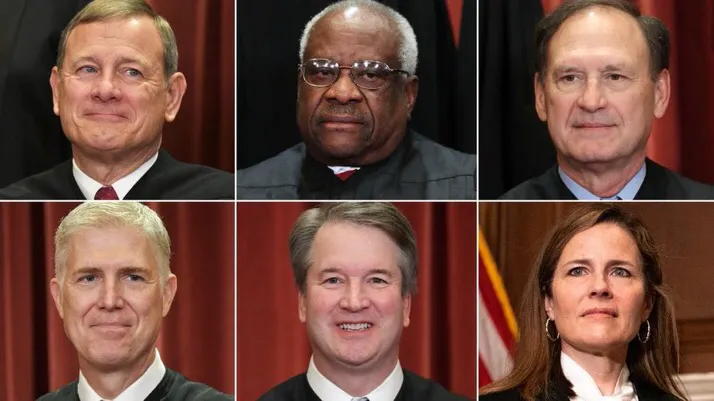
"The Court’s disposition of this application does not mean that any measure taken by the Government to implement the Order will necessarily be lawful," the majority wrote in the Supreme Court's official opinion. "On that score, time will tell."
In a sharp dissent, Justice Ketanji Brown Jackson criticized her colleagues' decision, writing that it "needlessly injects chaos and uncertainty" into the upcoming midterm elections and calling the court's standing requirements a "Kafkaesque nightmare," as reported by The Hill.
President Trump signed Executive Order No. 14399 on March 31, 2026, directing the Department of Homeland Security to compile state citizenship lists and ordering the USPS to deliver mail ballots only to verified citizens on those lists, according to Votebeat.
A dozen Republican-led states supported the measure, arguing it is necessary to protect election integrity, while Democratic governors and voting rights organizations argued that states run elections and the policy would disenfranchise voters, according to The Hill.
The legal battle intensified after the U.S. Postal Service finalized its implementation regulations on August 21, 2026, according to PBS News.
Luttig: It doesn’t matter what the Supreme Court does from this point forward. For two years, the Supreme Court has authorized the absolute lawlessness and unconstitutional activity of this president.
— Acyn (@acyn.bsky.social) View on Bluesky
Because the Supreme Court ruled that the states sued too early before the rules were finalized, legal experts say the ruling effectively invites states to immediately refile their lawsuits now that the USPS regulations are active, according to PBS News.
Meanwhile, the Department of Justice has already asked a federal judge to lift the remaining nationwide block on the Postal Service restrictions, according to The Hill.
Voting rights groups, including the American Civil Liberties Union, have vowed to continue fighting to keep the nationwide injunction in place to prevent disruptions to the November midterms, according to the American Civil Liberties Union.
The active nationwide block remains under review by the district court, which must now decide whether to grant the Justice Department's emergency motion to lift the remaining postal restrictions before voting begins, according to The Hill.